Schrödinger's Commodity: Why I beat games without using potions
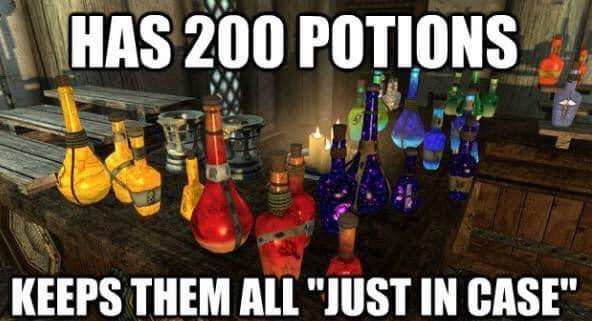
At the final chapter of Ni no Kuni II, I was scrolling through my inventory out of habit. That's when saw that I still have not spent any consumables the game gave to me during the entire course of the game. Completely untouched. Alongside a stack full of other consumables I had obtained throughout the game, approximately none of them were used.
I have done this in nearly every traditional RPG I've ever played. I finish the game heavier than when I started, dragging along a backpack full of "just in case." And for a long time I assumed this was a me-problem, some kind of low-grade hoarding instinct that happened to express itself in video game economies.
But then I thought about Monster Hunter and FFXVI, two other games I recently played. And a handful of other games where I never once felt that same attitude towards consumables. In these games, using a consumable felt natural, even correct, almost every time. And I started to suspect the problem wasn't me. The problem was that some games teach you it's safe to spend, and some games never teach you anything at all.
Information Obscurity
You're a few hours into Dragon Warrior 97. You crack open a chest tucked at the edge of the map and find a Strength Potion. The shop back in town didn't carry these in stock. So: is this thing rare? It was tucked inside a secret chest, so it must be rare. You have no way to know. So you do the only sensible thing: you save it. You tuck it away for the "real" fight, the one that's actually going to need it. That fight, of course, never arrives. Or it arrives and you're too anxious to spend the only copy you have, so you grind through without actually using it.
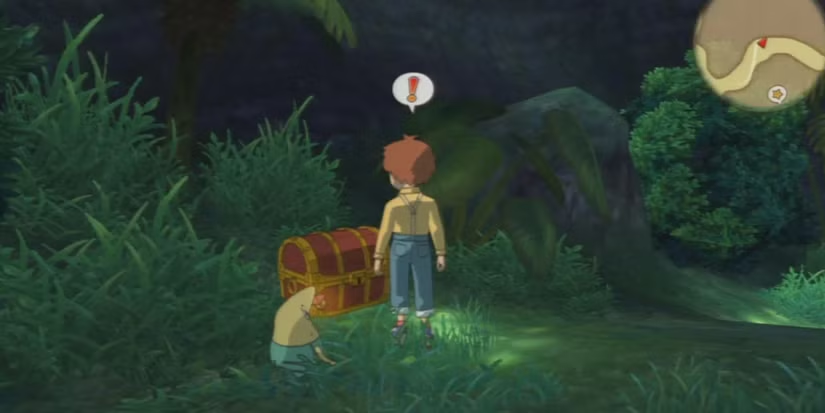
Then you reach the next town. The shop sells Strength Potions for 600 gold. It's dirt cheap. You weren't being careful. You were being uninformed, and the game let you mistake one for the other.
I want to call this Schrödinger's Commodity: the item's true value is unknown and unknowable until the moment you're forced to spend it or discover its price elsewhere. And the instant you find out, the mystery collapses and the item becomes a boring, ordinary commodity. The chest that felt like a reward two hours ago retroactively becomes a non-event. What you found was something you could've bought at any time, if only the game had told you so.
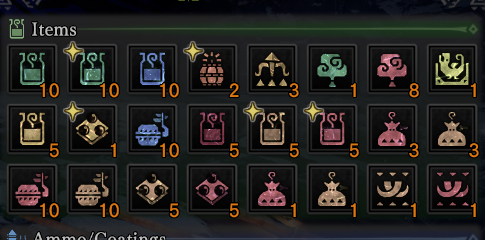
Compare that to Monster Hunter, where potions are something you craft from herbs you picked up on the way to the fight, refillable at the supply box before every hunt, capped at a small carry limit. There is no mystery to solve. The game has already told you, through repetition, exactly what this item is worth: cheap, plentiful, and meant to be used. So you use it, constantly and strategically. The scarcity is real, where you do run out mid-hunt sometimes, but it's legible scarcity. You know the rules of the system you're operating inside.
The Shop Catalogue
Once you start looking for this pattern, it shows up in many RPG shops as well.
Picture the standard JRPG town. You've got a little gold. The shop sells a sword that bumps your damage from 9 to 12. Do you buy it? You don't actually know. Maybe the next town has a better sword for the same price. Maybe there's a side quest two screens away that hands you a free upgrade, and you just spent your only gold on a worse version of it.
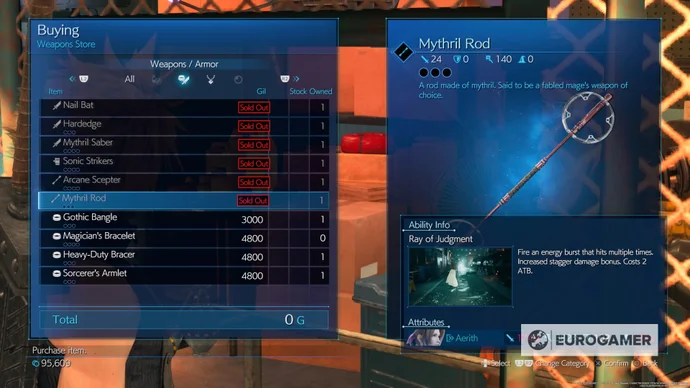
JRPGs love doing exactly this to you. Dangling a quest reward that quietly obsoletes the thing you just paid for a few minutes ago, and it teaches a lesson that spending, in general, is risky. You're reinforced not to spend. You're taught that the correct move is always to wait one more town, see one more shop, before committing anything.
This is the same Schrödinger problem as the Strength Potion example, just zoomed out from "is this item rare" to "is this purchase a mistake I won't find out about until later." The mechanism is identical - information that would let you make a good decision exists somewhere in the game, just never at the moment you need it.
Beyond RPGs
I want to pause the JRPG examples for a second, because it would be easy to conclude this is some inherent property of the genre - too much loot, too many chests, too sprawling a map, etc.
Pragmata, a third person shooter, gives you limited ammo and healing items, much like Dark Souls' Estus Flasks. There's no shop. No crafting menu. No visible economy at all. And yet I never once felt the urge to hoard on the limited ammo of my weapons. Why? Because the level design itself is the signal. By the time you run a weapon dry, a refill or an alternate weapon is already in sight, paced into the next room or the next encounter. The game doesn't need to tell you "this is refillable" with a UI element or a vendor. The pacing and rhythm of the game reminds you over and over, until you internalize the rule without ever consciously learning it. It makes you as a player a lot more comfortable in spending your limited ammo, and even puts you in fights where you do need to use your bigger damage weapons, constantly encouraging you to not save your ammo.
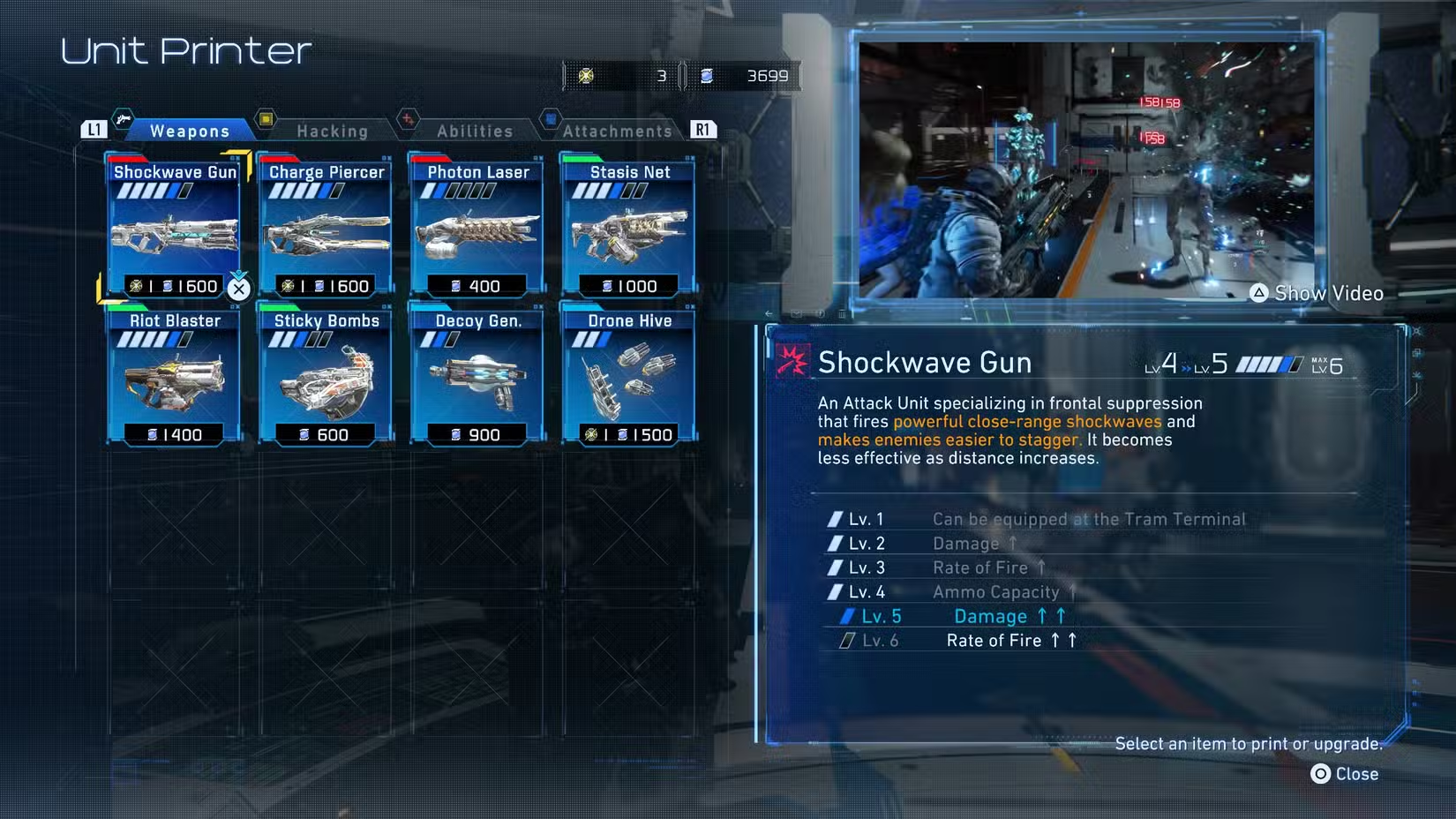
This is the same thing Dark Souls does with bonfires. You're never wondering whether to save an Estus charge, because the game has spent its entire runtime training you that a refill is always one checkpoint away. Guaranteed periodic refill actively trains you toward usage.
These games show that a an opaque economy is not necessarily the problem - it's the consistency and signals within the game that promotes usage.
Rare Candies
So far, every example has been about false scarcity - items that seem rare but aren't, value that's hidden rather than absent. Pokémon's Rare Candy is a useful counterexample, because it breaks that pattern. The game is completely upfront about Rare Candy: it's rare, it's limited, it's explicitly flagged as a precious resource. There's no mystery or details hidden away from the player - you know exactly what you're holding.
And I still hate it. Because being told a resource is scarce doesn't make spending it feel any better. Honestly, it just makes hoarding correct instead. Rare Candy gates an entirely ordinary part of progression (leveling up) behind an item you're terrified to use, for a payoff (one level) that's neither fun nor strategic.

This is where I think a second axis enters the picture. Transparency alone isn't enough. Even a perfectly honest, perfectly legible consumable still needs to be worth using: either mechanically interesting, capable of swinging a fight, fun to deploy, etc.
Slay the Spire's potions are one example here: you almost always know what a potion does and how rare it is, but the reason you actually drink it mid-combat is that it slots into a combo, saves a fight that is otherwise not beatable, having potions lets you path more aggressively into elites, etc. Scarcity that's honestly labeled but mechanically boring is just a worse version of the same hoarding problem, whereas a game that's designed for rare items to be strategic choices and rewarding use shows that players will use scarce items, given that the game design promotes them from being used.
The economy you only understand in the credits
The widest version of this problem doesn't even live at the item or shop level. It's the whole game.
Final Fantasy VII Remake, a 2020 game, built with every modern UX convention available, starts you off earning something like single digit gil per enemy. Genuinely spare change. You spend the early hours broke, treating every purchase like a real sacrifice. By the final chapters, gil is flowing in by the hundreds, and money has quietly stopped being a constraint at all. You spend the first third of the game rationing currency as though it's permanently scarce, when it was only ever early-game scarce, and there was no way for you to tell.
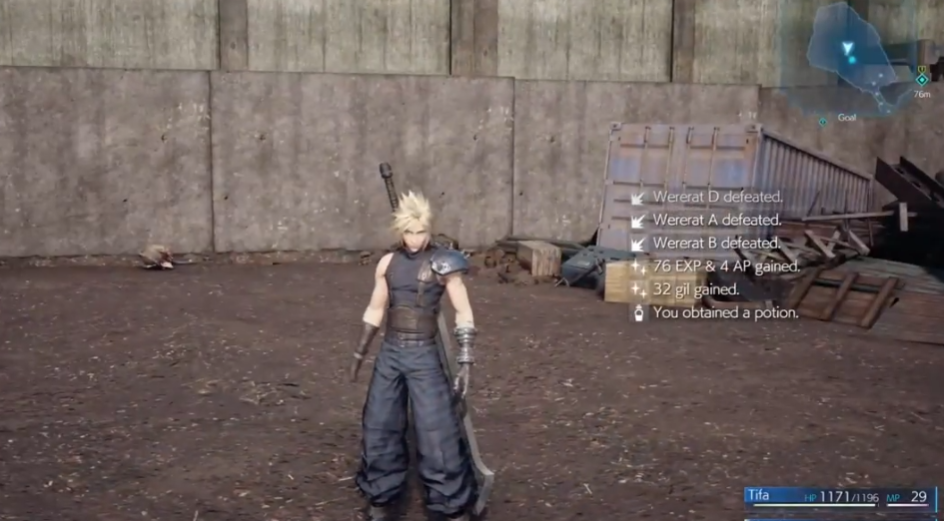
This is the same root failure as the High Potion, just stretched across the entire runtime: you can't make a good decision about your present resources without knowing your future income, and the game only reveals that information retroactively, once it's too late to act on it differently.
What you're really missing is your economic social status, and I mean that almost literally. Kind of like the way you'd check your bank balance against a cost of living before deciding whether you can afford something. Are you actually broke right now, in a way the game wants you to feel? Or is this just an early-game low that resolves itself in the next chapter, and you're rationing for no reason? Is your current net worth considered "rich" in this fantasy world? Is this purchase considered "affordable"? Should you buy the sword, skip it and save for something better next town, or hoard the gold entirely in case there's an even bigger purchase down the line? In a transparent economy, you know if your wage is below average or above average, and you know if you're making a smart financial decision or wasting your savings. In a video game where you don't know what the cost of living is, or what the average income looks like, there is no way you can make an educated financial decision.
Here's my take: it's just poor game design. Whether you're meant to feel piss-poor in chapter two, or you have too much currency that you can buy literally anything at the final chapter of the game, none of it was intentional and the numbers probably were pulled out of thin air. It doesn't actually matter which one is true though, because every option you've got - whether to buy, skip, save, hoard - ends up feeling equally wrong. Not because any of them are wrong, but because none of them were ever legible enough to feel like a choice in the first place. That's the real cost of an opaque economy: not that you make bad decisions, but that no decision is available to you that feels like a decision at all.
What actually works
The systems that work, such as Monster Hunter's craft-and-restock loop, Dark Souls' bonfire refills, Pragmata's paced encounters, all share one thing in common: they teach you the rules of their own economy before asking you to trust it, and they keep teaching you, consistently, for the entire game. You're never left to reverse-engineer your own resource curve from a single data point found three towns too late.
The systems that fail, essentially all traditional JRPGs, all withhold the one piece of information that would let you act rationally, and only hand it over once the moment to use it has already passed. Rare Candy is the interesting edge case: it tells you the truth and still fails, because honesty about scarcity isn't the same as making that scarcity fun to navigate.
There are many systems that work really well, such as automatic refills, a cooldown system, or consumables that unlocks permanent quality of life where there is no reason NOT to use it. If you're hoarding items, or saving that special consumable for that moment that never arrives, don't worry, it's not you. It's just poor game design.